
When people start comparing mini implants vs regular implants, the question underneath it all is often the same: where do I fit in this? Dental implant treatment can sound straightforward until you realize not every smile, jawbone, budget, or timeline looks the same. That is where many people start to feel uncertain. They wonder if they have enough bone, if treatment will be too involved, or if they have already run out of practical options.
Innovation has a way of changing that. As dental care continues to evolve, eligibility is no longer defined as narrowly as it once was. Traditional implants still serve an important role, but mini dental implants have expanded what may be possible for many patients by offering a smaller, less invasive, and often more affordable alternative. For people who thought implant treatment might be out of reach, that shift can open up a new conversation. The comparison between mini implants and regular implants reveals a solution that makes sense for your health, your comfort, and your life.
Mini Implants vs Regular Implants: How Are They Different?
When comparing mini implants vs. regular implants, it helps to start with a basic truth: dental implants do not all work the same way. Both options replace missing teeth by anchoring to the jawbone, but they differ in size, structure, and placement. Those differences shape the treatment process from the very beginning.
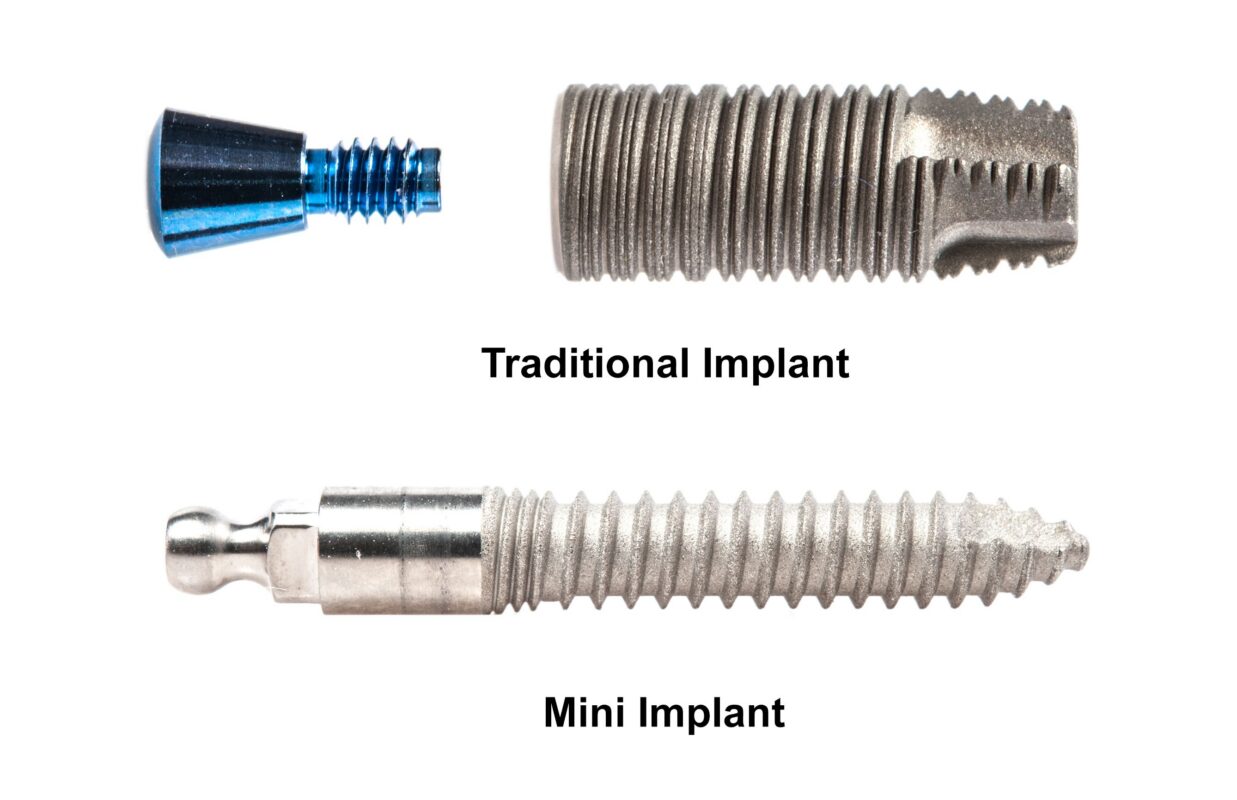
One of the clearest differences between mini implants and regular implants is diameter. Regular implants are typically about 5 millimeters wide, while mini dental implants measure less than 3 millimeters in diameter. Dr. Apel places them with a less invasive approach. Instead of creating a larger incision, he can often make a small opening in the gums and place the implant with minimal disruption to the surrounding tissue. Patients often experience minimal bleeding, a shorter procedure, and a smoother recovery.
Structure creates another important difference. A regular implant usually includes multiple parts: the implant post, an abutment, and the final crown. Those components are placed in stages, so treatment often unfolds over several appointments with healing time between each phase.
On the other hand, mini dental implants are one-piece. Each implant is a slim titanium post with a ball-shaped end built into the same piece, simplifying the process by eliminating the need for a separate abutment later. With fewer parts to place and fewer stages to complete, the process often moves more efficiently from start to finish.
Mini Implants vs. Regular Implants: How Bone Loss Can Affect Your Options
Regular implants can be an excellent option, but they sometimes require more preparation before treatment can begin. When bone loss has reduced the amount of support available in the jaw, a bone graft rebuilds the area before the implant is placed. That extra step can add months to the process, since the graft needs time to heal before treatment can move forward.
Mini dental implants often make treatment more accessible for patients with reduced bone volume. Their narrower design often allows Dr. Apel to place them in many cases without grafting, shortening the process considerably.
The financial side of treatment often reflects those differences. Mini dental implants usually involve fewer appointments, fewer procedural steps, and less preparatory work, which can lower the overall cost. For patients seeking an efficient, practical, and more affordable solution, mini dental implants can be a very appealing alternative.
What Are the Benefits of Dental Implants?
Did you know tooth loss can have serious consequences beyond changing your smile?
Teeth naturally stimulate the jawbone during everyday activities like chewing and biting, helping to keep it strong and dense. Without this stimulation, the jawbone begins to deteriorate in a process known as resorption. Over time, this bone loss can lead to changes in your facial structure.
Dental implants are a reliable solution for replacing teeth.
They are sturdy, artificial roots that support replacement teeth, such as crowns, bridges, or dentures. Dr. Apel places these titanium posts into your jawbone, where they gradually fuse with the bone. This fusion creates a strong, stable foundation, improving your oral health and quality of life.
Experience the Benefits of Mini Dental Implants
Choosing between mini dental implants and regular implants comes down to more than comparing two treatments side by side. It comes down to finding the option that works with your bone, your goals, your timeline, and your budget.
If you are ready to stop guessing where you stand and start looking at real options, schedule a complimentary consultation with Dr. Apel at Designing Smiles Dentistry. IT’s time to stop measuring yourself against assumptions and start looking at what is actually possible for your smile.

 English
  Spanish