
The name mini dentures brings together two parts of the treatment: miniimplantes dentales and dentures. Mini implants are small titanium posts that we place in your jawbone to anchor your replacement teeth. Together, they create a more secure alternative to conventional dentures that rest on your gums. Think about a tree standing in your yard. You see the trunk, branches, and leaves, but it’s the roots underneath that keep everything firmly in place. With mini dental implants, your dentures have something secure to hold on to. You can spend less time adjusting them, reaching for adhesive, or second-guessing what you eat. Even if no one else notices the difference, you’ll appreciate having teeth that stay where they belong.
Mini Dentures vs. Traditional Dentures: How Are They Different?
Ask someone who’s worn traditional dentures for years what bothers them most, and you might hear a familiar complaint: “They never seem to stay in place.”
For some people, the trouble starts at mealtime. Their dentures shift when they chew, food collects underneath them, or sore spots make eating uncomfortable. Others are frustrated by how much attention their dentures require throughout the day. “I’m always worried they’ll slip when I talk” is another concern that comes up.
It’s easy to underestimate how much strength and stability matter until you’ve spent years living without them.
Mini dentures can help address many of these frustrations. Dental implants anchor your replacement teeth to your jawbone, providing support that conventional dentures lack. With less movement, you may find it easier to chew, speak comfortably, and enjoy meals without constantly adjusting your dentures.
A more secure bite may also help you enjoy a wider variety of foods. A varied diet can support better nutrition, especially if uncomfortable dentures have limited your food choices.
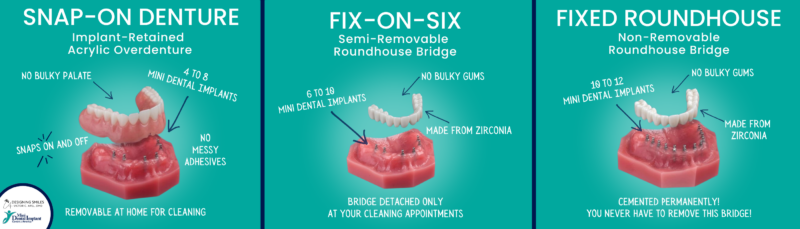
¿Cuáles son las ventajas de los miniimplantes dentales?
Some patients come to us after years of struggling with conventional dentures. Others have only recently started wearing them and already know something needs to change. We also meet people who’ve been told they aren’t candidates for dental implants, often because they’ve lost too much jawbone.
Before ruling out prótesis sobre implantes, we want to understand what you’ve experienced and what options are available.
At Designing Smiles Dentistry, Dr. Apel evaluates your jawbone, reviews your medical history, and examines your existing dentures. If your current dentures are in good condition, we may be able to modify them to attach to mini dental implants. If they’re worn, damaged, or no longer fit properly, you may need a new denture.
Bone availability is another important part of the evaluation. Mini dental implants are approximately half the diameter of conventional implants, which gives Dr. Apel more flexibility when working with a narrow jawbone. Even if another dentist has recommended bone grafting or ruled out implants altogether, you may still qualify for treatment.
Our practice is a designated Mini Dental Implant Center of America in Melbourne, and Dr. Apel has received additional training in mini implant placement. He takes the time to review your circumstances, explain his recommendations, and help you understand what treatment would involve before you decide.
Explore Your Options for Mini Dentures in Melbourne, FL
If you’ve been relying on denture adhesive, dealing with a loose fit, or wondering if you’ve lost too much bone for dental implants, we’d like to help you explore your options. At Designing Smiles Dentistry, Dr. Victor Apel can evaluate your jawbone, assess your current dentures, and explain how mini dental implants could improve their stability.
You may have more options than you realize, even if conventional implants haven’t been recommended in the past. Contact our Melbourne office to programar una consulta gratuita and find out if mini dentures are right for you.

 Spanish
 English