
The word “veneer” appears in everyday language when presentation matters. Phrases like “a veneer of confidence” or “a veneer of professionalism” describe a surface that communicates intention before anything deeper is considered. The meaning is consistent across these uses: a thin outer layer that influences how something is perceived. In woodworking, a veneer is a thin layer of selected material applied to a solid base. It brings forward grain, color, and finish, shaping how the piece looks and feels, while the underlying structure continues to provide strength. Dental veneers apply this concept to dentistry. They sit on the front surface of the tooth, where appearance and daily use intersect. Their role is not to replace the tooth, but to refine and reinforce what is already present.
Small changes at the surface can shape how a smile is seen as a whole. Veneers strengthen enamel and adjust shape, balance, and color, improving appearance while keeping the teeth working together. They address the part of the tooth people see first, without altering what already functions well underneath.
What Are Dental Veneers?
Dental eneers change the appearance of a tooth by refining its front surface. Dr. Apel bonds a thin, precisely crafted layer to the visible portion of the tooth, the area seen when you smile, speak, or laugh. Because that surface carries so much visual weight, even subtle refinements can shift how a tooth fits into the overall appearance of your smile.
Veneers have to be personalized because teeth are not uniform. Each tooth has its own size, shape, and position in the mouth, and it works together with the surrounding teeth when you bite. A veneer made to a standard size would not sit flush against the tooth. It could create edges that trap plaque or change how the teeth meet. Custom shaping and carefully controlled thickness allow the veneer to fit smoothly and function comfortably.
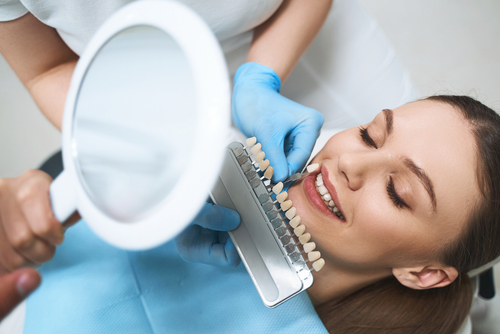
Color is customized for the same reason. Teeth vary in brightness and tone, and they reflect light differently depending on enamel thickness and skin tone. Dr. Apel selects a shade that blends with your existing teeth or reaches the level of whiteness you want, from subtle to bright, so the veneer does not stand out from the rest of your smile.
Shape and length are also adjusted. Veneers are contoured to follow your facial proportions and smile line, which helps them look natural when you talk and smile. Personal preferences guide the final details. Some people want to keep a small gap or a bit of natural variation. Others prefer a more even look. Those choices shape how each veneer is finished, ensuring the result looks like your teeth, not a generic set.
Are Dental Veneers Right For You?
Veneers can be a strong option if you want to address visible concerns that affect how your teeth appear when you smile or speak. Dentists often recommend veneers for concerns that sit on the surface of the teeth rather than deep structural problems, including:
- Deep or internal stains that do not respond well to professional whitening
- Small chips, surface cracks, or worn edges
- Small gaps between teeth
- Enamel that looks rough, pitted, or mottled
In these situations, veneers mask surface irregularities, allowing the smile to appear smoother, brighter, and more balanced.
During a visit with Dr. Apel, he examines your teeth closely, discusses the specific changes you would like to see, and determines whether veneers align with those goals.
What to Know Before Choosing Veneer Treatment
It is equally important to understand the long-term commitment required by veneers. For most people, traditional veneers represent a permanent treatment decision. While a veneer itself can be removed or replaced, one step of the process cannot be reversed. To place a veneer properly, Dr. Apel removes a thin layer of enamel from the tooth. Once that enamel is gone, the tooth cannot remain uncovered without increased sensitivity and a higher risk of damage or decay.
From a practical standpoint, choosing traditional veneers means choosing ongoing care. Over time, veneers typically require replacement, making this a maintenance-based treatment rather than a temporary cosmetic adjustment.
Learn More About Your Treatment Options
If you are considering veneers, the question usually is not whether they work, but how they would change your smile. Seeing that answer clearly makes every decision that follows more straightforward. When you are ready to move forward, contact us today to book a free consultation with Dr. Apel.

 English
  Spanish