
What would it feel like to wear an upper denture without the plate covering the roof of your mouth? Palateless dentures make that possible, but the amount of material is only part of a bigger issue. A denture that shifts while you chew creates a different problem than one that feels bulky. Both can affect how often you notice your teeth throughout the day.
A 2025 study of more than 1,300 people who received implantes dentales captures some of that experience. People with total dentures reported considerable improvements in oral health-related quality of life after implant treatment, and greater denture stability was associated with better chewing function. The researchers also noted that not feeling material against the palate contributed to comfort when discussing why people chose implant treatment.
Stability and coverage may seem like separate concerns, but the design of an upper denture connects them. Addressing one does not necessarily involve compromising the other. At Designing Smiles Dentistry in Melbourne, we provide implant-supported palateless dentures for patients who want secure replacement teeth without a plate extending across the roof of the mouth.
Why Patients Ask Us About Palateless Dentures
People usually ask about a different denture because something about their current one bothers them.
With an upper denture, we commonly hear concerns about:
- Poor fit or movement: The denture shifts while eating or does not feel secure.
- Soreness or irritation: Certain areas rub, feel tender, or become uncomfortable under pressure.
- Eating or chewing difficulty: Chewing feels less efficient, certain foods are difficult to manage, or the denture moves during meals.
- Changes in speech: Words or certain sounds feel different or more difficult to pronounce.
- Gagging or bulkiness: The denture feels too large, extends too far back, or triggers the gag reflex.
Chewing is not the only part of eating that can change with an upper denture. Some people notice that food does not taste the same. Researchers tested that experience in 170 upper-denture wearers, comparing their ability to recognize tastes with their dentures in place and again with them removed. Taste perception changed significantly.
Taste is closely tied to other sensations you experience while eating. Temperature, texture, aroma, flavor, and the physical sensation of each bite work together as you eat. Covering the roof of the mouth changes how food contacts that area and how you perceive some sensations. Food is tied to comfort, memory, and time spent with others. Being able to taste and enjoy it is a small part of life that can feel much bigger when it changes.
Understanding the Design Behind Palateless Dentures
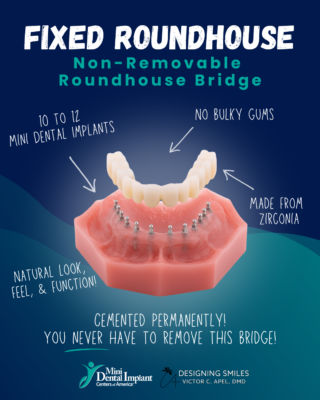
A popular palateless denture option that we provide is a roundhouse bridge. A puente de la casa redonda follows the natural curve of your upper jaw in a U- or horseshoe shape. The replacement teeth sweep from one side of the arch to the other, while the center remains open and leaves the roof of your mouth exposed.
A traditional upper denture has a broad acrylic base that extends across the roof of your mouth. That contact with your gums and palate helps create the seal that keeps the denture secure. Think of it somewhat like a shallow suction cup: the larger surface area and close seal help resist lifting, rocking, and slipping. Remove the plate without another source of support, and the denture loses a major part of what keeps it in place.
How Mini Dental Implants Anchor Your New Teeth
A roundhouse bridge closely follows the look and shape of your natural teeth, and its support has something in common with them, too. Dr. Apel places a series of miniimplantes dentales throughout the dental arch, securing each one in the jawbone.
Once placed, the implants begin a process called osseointegration. The surrounding bone grows into close contact with the implant surface, creating a strong connection within the jaw. In that sense, the implants take on a role similar to natural tooth roots: they provide support directly from the jawbone.
The roundhouse bridge then uses those implants as its foundation. Its stability comes from multiple support points across the arch, which is why the restoration can stay secure without relying on a plate across the roof of your mouth!
What Would You Change About Your Dentures?
Living with dentures can gradually turn small compromises into habits. You cut food differently, adjust when your teeth shift, or accept the feeling of material against the roof of your mouth because it has become part of wearing a denture.
But some of those compromises come from the way a denture is designed, not from replacing missing teeth. Palateless options provide another way to think about stability, coverage, and how your teeth feel throughout the day. If there are parts of your denture you’re tired of working around, contact Designing Smiles Dentistry in Melbourne, FL, to programar una consulta gratuita.

 Spanish
  English